
Reclaim Your Guilt.
Guilt is valuable, let's be conscious of how we handle it.

“Guilt is not a response to anger; it is a response to one’s own actions or lack of action. If it leads to change then it can be useful, since it is then no longer guilt but the beginning of knowledge.”
— Audre Lorde
We all experience guilt, be it interpersonally, in relation to our lifestyle choices or just generally towards all forms of decisions we make throughout life.
“I feel guilty that I don’t call my Mum more.”
“I feel guilty I didn’t go to the gym today.”
“I feel guilty that I decided to go out last night and now I feel like I can’t focus on my work.”
We all have our own renditions of these stories that we narrate internally, and often they come with a sense of shame, regret and berating of oneself.
Sometimes, and perhaps most evident in relational contexts, this leads to the experience of feeling “guilt tripped”. This is when we feel negatively affected by another person’s reaction to our actions (or lack of action), thus inducing a sense of guilt within us.
This feeling of being “guilt tripped” often leads to an action that we perform to alleviate ourselves from the discomforting feelings associated to guilt, and acts as an attempt to create some kind of equilibrium in the situation. We often also guilt trip ourselves, since we all derive meaning about ourselves from the decisions we make in life, thus becoming our own harshest critics.
However, any “guilt trip” fuelled action can be viewed as a reaction to a reaction. This evoked reaction resembles something like a drop in the ocean, causing a momentarily ripple which eases some of the discomfort that comes with feeling guilty.
The idea that it resembles a “ripple” comes from the notion that this action often doesn’t have a lasting positive effect on the situation in question; that is to say that we haven’t connected to the desire we truly want to move towards, and ultimately, we are acting from a place of unconsciousness and misalignment.
The more of these “guilt trip” fuelled actions we play out in the life, the more resentment will likely build up towards the person, situation or dynamic which is causing us to feel guilty. This is because we are pouring our energy into something which we are not truly in alignment with, that is to say, that it hasn’t consciously come from us.
Then, what once felt like shame or regret can transform into anger, a feeling of suffocation and a sense of self-righteousness. These feelings make it more and more likely that we will completely cut ourselves off from the very thing that made us feel guilty in the first place. This retreat phase can persist or can ignite another guilt trip.
This gives birth to something I will define as the guilt trip- retreat cycle. Here, a guilt trip causes you to move hastily towards something without having established want it is you actually want, whilst retreating means you to frantically run away from it because your engagement with it feels too much.
These two behaviours in essence are opposite in nature and their relationship is dynamic in the sense that either one can lead to the other, they can be cyclic or they play out linearly, depending on the person and situation.
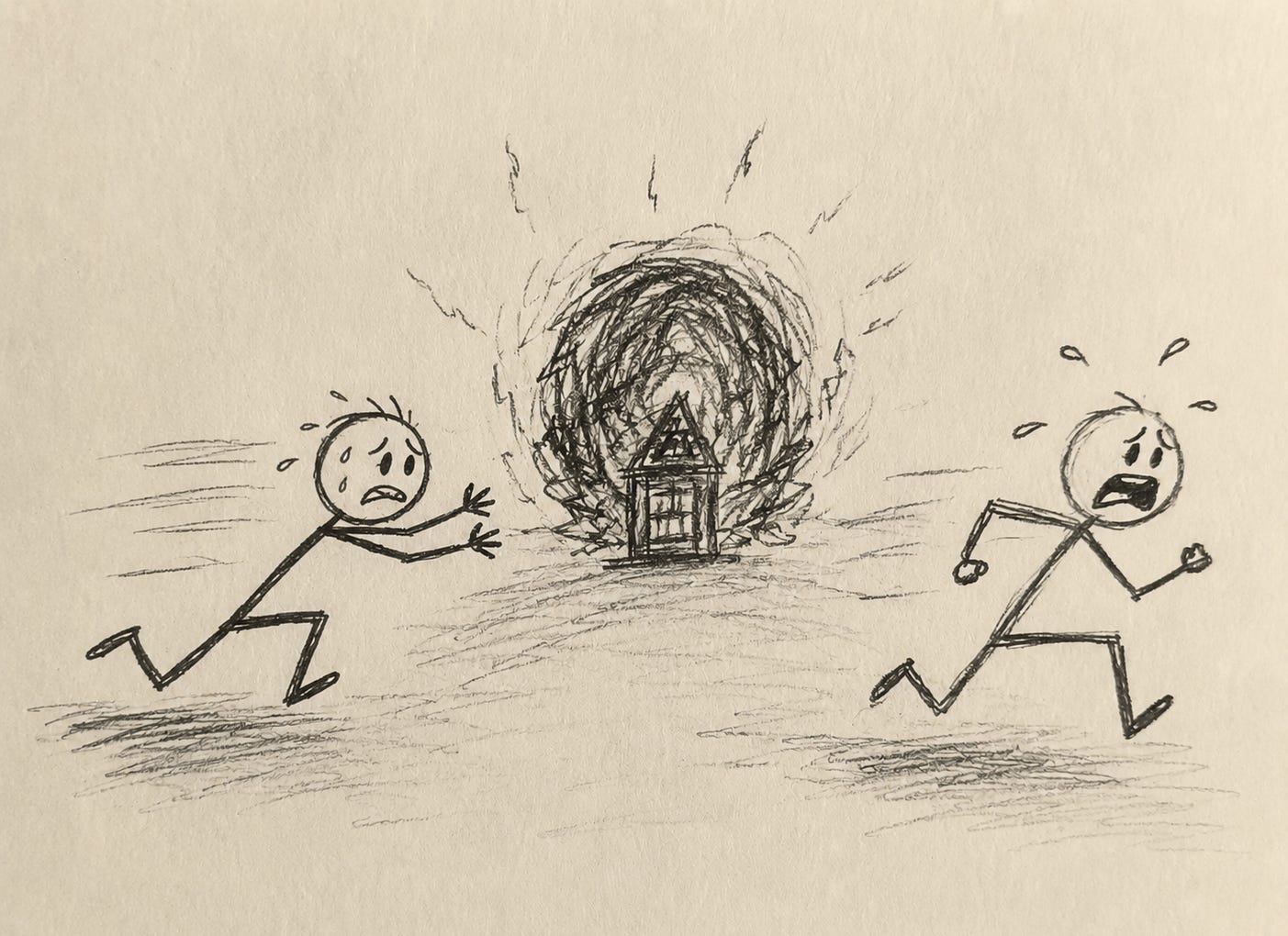
When something drains us, we run away from it and build a wall around our self for protection. We don’t like the way guilt feels, and so we completely severe ourselves from the roots we perceive it grows from.
Imagine every time you didn’t go to the gym you felt really guilty. This guilt comes from you associating not going to the gym as being a slob. So, in reaction to this you force yourself to go the gym even in situations where you really really didn’t have the time or energy to do so; just so you could escape the dreaded feeling of guilt. Now suddenly, you start associating going to the gym, and even just thinking about going to the gym, as a drain on your energy.
In reaction to this you decide that the gym isn’t for you after all. Membership cancelled.
By being swept up in this reaction you have completely disconnected from the feeling of joy that working towards feeling fit and strong once gave you, and you have thrown your aspirations for embracing a healthy habit out of the window, because heck, this mental struggle can’t be good for me.
Instead of hastily trying to do something to avoid discomfort or retreating from it entirely, this is the time for us to step back and consciously reclaim our guilt, separating the feeling of guilt from the stories we construct about ourselves in response to it. In doing so, we can work towards understanding what our guilt is trying to teach us and guide us towards in our lives.
By establishing the following fundamental pillars of guilt within us, I believe we can access a sense of inner alignment, which can eventually translate to external fulfilment:
You feel guilty because you care deeply about something.
Guilt is a sign that you care about something deeply. This could be a person, like your Dad for example, a cause, such as fighting climate change, or an ambition, such as getting a promotion within an industry you feel passionately about.
It might feel obvious reading this, but once guilt kicks in and starts taking over your experience of reality, it can be easy to forget that the root of this guilt comes from a deep care for something or someone. Holding onto to this love and care is essential to making sure that one’s actions in response to the feelings of guilt are in alignment with your heart.
On the reverse side of this, if you ever struggle to connect to or to identify the things you really care about in life, look at the things that have made you (or are making you) feel guilty. The gold is likely to be there.
You feel guilty because there is something you desire but you don’t know how to hold it.
Often when we feel guilty it’s because we want to achieve or feel something, but our actions aren’t in alignment with these desires.
Imagine someone you really love and want to feel close and connected to, but they also have developed some qualities which you find quite irritating recently. This has made it hard for you to spend time with them, so you avoid them. This in turn makes you feel guilty, and so you force yourself to spend time with them to make yourself, and them feel better (guilt trip alert).
Ultimately, this time you spend together makes you more irritated and so you pull back even more, and eventually that relationship breaks down or it starts to feel distant (retreat alert).
This isn’t an easy situation to be in, but this is where one must connect with the fundamental roots of the guilt and remember that it involves someone you care deeply for, and whom you want to feel connected to.
Here, conscious action must take over to avoid entering a guilt trip- retreat cycle. It’s easy to think that these things should feel “natural”, but honestly, I am a firm believer that everything and anything that brings you joy in life requires conscious engagement.
So this is where you ask yourself:
How can I change the way I interact with this situation so that I can be anchored to my heart and my desires?
How can I do this and still respect my own needs and boundaries?
Can I be more honest with myself about my feelings and desires, and can I communicate this to the people involved?
By asking yourself these fundamental questions and meeting them with radical honesty, one can begin to move closer to aligning with your desires.
In the particular example I gave above this could look like identifying an alternative way to spend time with this person; something which feels less likely to evoke irritation within you, but that still fulfils your desire to you feel connected to them in a new or different way (playing sports, games or getting creative are great ways to do this!). Or, if you feel the relationship has the capacity, having an honest conversation about how you feel towards the relationship can be truly transformational for the dynamic.
The point here is not to fixate on “achieving” anything, but to be conscious of how you are engaging with the situation.
You feel guilty because you feel like you are not enough.
A feeling of guilt is often coupled with the belief that we are inadequate in some way. This is the very quality of guilt which makes us prone to handing our power over to it. This is because often we don’t just feel guilt, but we assign meaning to it which latches itself onto our identities and causes a deficit within us.
If I don’t do this then “I am a bad partner” and if I don’t do that then “I will be incapable of getting this job of my dreams”.
Having these rigid and energy draining labels that we slap on ourselves every time we feel guilt is the perfect breeding ground for the guilt trip-retreat cycle. This is because these identity labels cause a reaction within us which sends us into an unconscious cycle of action in order to counter them, this is then followed by a sudden need to pull away, because it all feels too much.
The key to remember here is that feeling guilty never equates to you not being “enough”. Guilt is a completely natural and ubiquitous human feeling that indicates that we are connected to everything and everyone around us.
The world touches us and we feel guilt towards certain things because we care for them and they converge on our desires. We can use our guilt to learn something about ourselves, but it’s important to keep that distinct from your self-worth.
If we can alleviate our guilt from our sense of lack, it becomes more likely that we can consciously engage with it from a place of feeling grounded and empowered.
Your guilt can help you identify how you are compromising your boundaries.
A fundamental principle for developing a conscious relationship with guilt, is to establish healthy boundaries around your actions, where anything and everything you do comes with a balance of self-preservation and openness to the world.
Acting unconsciously in response to a guilt trip is an indication that you have porous boundaries, that is to say, you are absorbing too much which doesn’t belong to you. This will eventually deplete your energy because you are frantically grasping at something that will make you feel like you are “enough”, rather than acting with the assurance that you are whole already.
Healthy boundaries in this direction can be established by identifying any beliefs, thoughts, feelings or expectations that you have absorbed, that don’t feel in alignment with you. This will help you feel grounded, self-preserved and empowered- allowing you to connect with what you truly want from the situation and begin to establish how you can move towards that.
On the reverse side of this, in the retreat phase, one is more likely to construct very rigid boundaries around themselves. This can play an important role in finding inner space and equilibrium in the short term, especially in response to situations which have felt intense. However, these rigid boundaries can often persist well past their best before date because they give you a sense of safety. If they do persist, they will ultimately cut you off from your desires. Healthy boundaries in this direction can be established by being aware of what you want to move towards, this will help you feel open heartened, free and connected.
Guilt is valuable, let’s be conscious of how we handle it, so we can grow.
Marisa, thank you so much for this! Completely not surprised that guilt (and shame) are your topic, knowing your enneagram haha!
And your concept of the guilt trip-retreat cycle! so important to reclaim it instead of just reacting or running away from it. not so long ago i was at both ends of that cycle myself.
I've done some pretty creative gymnastics around avoiding it... so will need to remind myself about this whenever i get pulled back in:
"Guilt is a completely natural and ubiquitous human feeling that indicates that we are connected to everything and everyone around us. The world touches us and we feel guilt towards certain things because we care for them and they converge on our desires. We can use our guilt to learn something about ourselves, but it’s important to keep that distinct from your self worth."
but its sooo uncomfortable - especially when it involves disappointing others. Sometimes I have a feeling it never disappears and more like you get better at recognising it, sitting with it, and not letting it make decisions for you. From your experience, do you think the voice actually gets quieter over time, or do we just get better at not obeying it?